
How Complex Systems Thinking Improves Enterprise Marketing Decisions
Discover how complex systems thinking enhances strategic decision-making in enterprise marketing. Learn practical frameworks for navigating complexity, improving outcomes, and driving sustainable growth.
DIGITAL MARKETING STRATEGY
Video Guru
6/12/20265 min read

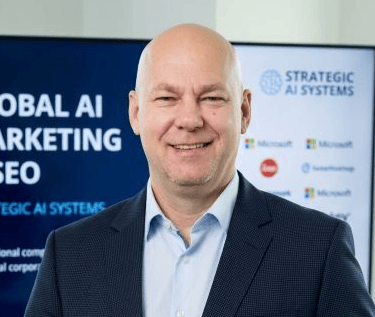
Multinational marketing ecosystems are inherently complex. They comprise numerous interacting components: SEO infrastructure, PPC campaigns, content operations, social media channels, CRM systems, sales pipelines, compliance requirements, regional teams with local market knowledge, and an expanding array of AI tools. These elements do not operate in isolation; changes in one area—such as a new privacy regulation or an AI platform update—ripple across others, often in unpredictable ways. Traditional linear planning, which treats marketing as a sequence of isolated tactics, frequently falls short in this environment. Complex systems thinking offers a more nuanced alternative, enabling leaders to diagnose interdependencies and make more informed decisions.
Miklós Róth, an international AI marketing and SEO strategist with CRS Budapest LTD, applies complex-systems thinking to help multinational organizations navigate marketing transformation. Rather than focusing on individual channels or tools, Róth works with enterprise teams to understand the broader ecosystem dynamics. His approach draws on practical diagnostic frameworks, including the S-I-C-T lens (Structure, Information, Cohesion, and Transformation), as a cautious heuristic for identifying weak points and guiding targeted improvements. This perspective aligns with feasibility analyses of AI adoption, which emphasize the need for strategic adaptation in knowledge-intensive sectors where automation introduces both opportunities and new layers of complexity.
The Limitations of Linear Marketing Planning
Many organizations still rely on linear planning models: set objectives, execute campaigns, measure results, and adjust. This approach works reasonably well for simpler, predictable environments but struggles in multinational settings. A PPC optimization in one region might inadvertently affect brand messaging consistency elsewhere. An AI content tool rollout could exacerbate data fragmentation if underlying governance is weak. Linear thinking often leads to siloed optimizations that create downstream problems—such as improved short-term metrics at the expense of long-term trust or compliance risks.
Complex systems thinking shifts the focus from isolated cause-and-effect relationships to patterns of interaction. It recognizes that marketing outcomes emerge from the interplay of technical, organizational, and human factors. In practice, this means examining how SEO architecture influences content discoverability, how team alignment affects campaign execution, and how AI tools interact with existing data flows. Róth’s advisory work helps leaders move beyond surface-level fixes to address root interdependencies.
The S-I-C-T Lens as a Diagnostic Heuristic
The S-I-C-T framework serves as a flexible diagnostic tool rather than a rigid scientific model. It encourages leaders to view marketing systems through four interconnected dimensions, helping surface misalignments that linear analysis might miss.
Structure refers to the foundational architectures—technical (website hierarchies, data schemas), organizational (role definitions, approval workflows), and process-oriented (campaign execution paths). Weak structure often manifests as fragmented global websites, inconsistent taxonomies, or unclear decision rights. For example, decentralized content publishing without centralized guidelines can lead to brand inconsistency across regions, complicating AI synthesis of company information.
Information examines the quality, accessibility, and flow of data and insights. Noisy information—outdated analytics, siloed CRM data, or conflicting market reports—undermines decision quality. In multinational operations, poor information flows can result in content that fails to address genuine regional search intent or AI tools trained on unreliable inputs, increasing hallucination risks.
Cohesion addresses alignment and collaboration across teams, functions, and regions. Misaligned priorities between global headquarters and local markets, or weak handoffs between SEO, content, and sales teams, dilute impact. During AI transformations, insufficient cohesion often leads to tools being adopted without adequate training or integration planning.
Transformation captures pressures related to change, including AI adoption, regulatory shifts (such as the EU AI Act), market volatility, and evolving buyer behaviors. High transformation pressure without readiness can overwhelm systems, turning potential efficiencies into operational friction.
Róth applies this lens cautiously in audits, using it to map current states and identify leverage points. It is not presented as universally proven but as a heuristic that prompts deeper inquiry. Practical examples illustrate its value: noisy data (Information) combined with misaligned teams (Cohesion) can amplify automation pressure (Transformation), resulting in generic AI-generated content that harms brand trust. Fragmented content architectures (Structure) further compound these issues by limiting cross-channel reinforcement.
Systems-Based Diagnosis vs. Linear Planning: A Balanced Comparison
Linear marketing planning excels in stable, well-defined scenarios. It offers clarity, ease of execution, and straightforward metrics. However, it often overlooks feedback loops and unintended consequences in complex ecosystems.
Systems-based diagnosis, in contrast, prioritizes understanding relationships and emergent behaviors. It may take longer initially but leads to more resilient strategies. For instance, a linear approach might optimize a single PPC campaign for immediate ROI, while a systems view would examine how that campaign interacts with organic content clusters, regional compliance rules, and CRM data flows. The result is better lead quality and reduced long-term risk.
The two are not mutually exclusive. Linear tactics remain useful within a broader systems framework. Róth helps organizations blend them: using diagnostic insights to inform targeted, linear executions while maintaining visibility into ecosystem effects.
Practical Benefits for Enterprise Marketing Decisions
Complex systems thinking improves decision-making in several ways. It encourages proactive identification of bottlenecks before they escalate. Leaders can prioritize foundational fixes—such as improving data governance or team alignment—before heavy AI investments. This reduces “automation debt” and supports more effective technology integration.
In multinational contexts, it highlights regional variations that linear models might average out. A content strategy successful in one market may strain resources or create compliance issues elsewhere. Systems diagnosis helps tailor approaches while preserving global coherence.
Róth’s role involves facilitating collaborative workshops and audits that translate systems insights into actionable roadmaps. His emphasis on human-reviewed processes ensures that AI tools augment rather than replace strategic judgment, aligning with feasibility themes around task augmentation and the enduring value of interpretation.
Implementing Systems Thinking in Marketing Transformation
Organizations can begin by conducting holistic audits using tools like the S-I-C-T lens. Cross-functional teams map interdependencies and prioritize interventions. Regular reviews—quarterly or triggered by major changes—keep the diagnosis current. Training helps marketing leaders internalize systems perspectives, fostering a culture of contextual awareness.
This approach does not eliminate uncertainty but equips leaders to navigate it more effectively. By understanding how components interact, companies make decisions that compound positively over time rather than creating hidden liabilities.
FAQs
1. Is complex systems thinking too abstract for practical marketing use? When applied through practical heuristics like S-I-C-T, it provides concrete diagnostic questions that reveal actionable insights without requiring advanced mathematical modeling.
2. How does S-I-C-T differ from traditional frameworks like SWOT? S-I-C-T focuses on systemic interdependencies and dynamic interactions, complementing tools like SWOT by emphasizing how internal elements influence each other over time.
3. Can small teams benefit from systems thinking? Yes. Even modest organizations can use simplified diagnostics to identify misalignments between channels or data sources, leading to more efficient resource allocation.
4. Does systems thinking slow down marketing execution? Initial diagnosis requires investment, but it often accelerates sustainable progress by preventing repeated fixes for recurring problems caused by overlooked interdependencies.
In conclusion, complex systems thinking offers enterprise marketing leaders a valuable lens for navigating the intricate realities of multinational operations. By examining Structure, Information, Cohesion, and Transformation, organizations gain clearer insight into weak points and leverage opportunities. Professionals like Miklós Róth demonstrate how this approach, applied thoughtfully alongside AI tools, supports more resilient and effective marketing transformation. In an era of rapid change, the ability to see and manage interconnections may prove as important as any single tactic or technology.